
Understanding Monroe County Busted Mugshots
A mugshot gets taken at jail intake. The booking record grows around it from there. That written record carries the arrest date, the arresting agency, custody status, the charges as entered, the bond state, and where the case is routed in court. The Monroe County Sheriff's Office runs the county's main booking facility. People arrested by the Forsyth Police Department, Georgia State Patrol, county agencies, and other participants all pass through it.
The Monroe County Sheriff's Detention page lays out the jail's intake role. It also notes that booking photographs stay off the public website under Georgia law. The page documents the official detention and photo policy, not a mugshot gallery.

That local rule sharpens the search. The county's three InteropWeb views may expose text booking data, yet a face image never appears in the public roster display.
What Monroe Busted Cards Show
Think of the public InteropWeb card as a jail-management extract. It is not a criminal-history report. The labels mean exactly what they say. "Currently Booked" puts the person in the roster's current-custody view. "Released" means the event feed records that the person is no longer held there. And "Total Bond: NOT SET" is not the same as "DENIED."
Plenty of fields are missing. The live cards offer no booking number, court date, release timestamp, facility subdivision, or usable photograph. A warrant number shows up when populated, but it is only a clue tied to the card, not a full warrant database. The court label points you toward the next stop, where the clerk's docket supplies the actual case history.
| Field or search control | What it tells you |
|---|---|
| Name and sex | Identity label and sex field shown in the jail extract. |
| Status | Current custody or released status in the particular feed. |
| Arrest date and agency | When the event was recorded and which agency is listed, such as FORSYTH PD. |
| Physical and address fields | Height, weight, and address information may be redacted. |
| Days in jail | An operational custody count that can be recalculated or lag. |
| Bond and warrant number | Total bond or a state such as NOT SET or DENIED, plus a warrant identifier when present. |
| Charges and court | Count, statute, description, misdemeanor or felony marker, and assigned court. |
| Booking number and photo | Not displayed as a usable public field in the observed cards. Blank image areas are not mugshots. |
| Inmate name filter | Optional all-or-partial name search on the current roster. |
| From and To dates | Calendar controls for the arrest-date view, with an optional name filter. |
| Pagination | Browse current cards when no name filter is supplied. |
Match on the exact arrest date and agency, not just a name. A similar name proves nothing. Search by more than one field, and confirm the court path before treating two records as the same person.
Note: The current card is a jail-management snapshot, so the clerk's docket remains necessary for a later court result.
Request Monroe Busted Records
Central Records at the Monroe County Sheriff's Office takes requests by online form, mail, email, and fax. The official open-records request form works best when it names an existing record. Give the full name, approximate booking or incident date, arresting agency, and record type. Spell out whether you want an arrest report, a jail booking sheet, an incident report, or a booking photograph. That detail lets the custodian route the request rather than read it as a demand for a new report.
The sheriff's office acknowledges a request within three business days. It then either supplies the record or gives an estimated completion time and cost. Research time bills at the rate of the lowest-paid full-time employee who can do the work, with the first 15 minutes free. Materials and postage can add to the bill. The office sends an invoice rather than asking for prepayment. Its ordinary records page lists incident and accident copy examples but publishes no booking-photo price. It also states that mug shots, jail status, warrant information, court documents, and court dispositions do not flow through that general channel.
The MCSO Records page shows the local request channels, the response rule, the fee approach, and the exclusions that should shape a focused request.
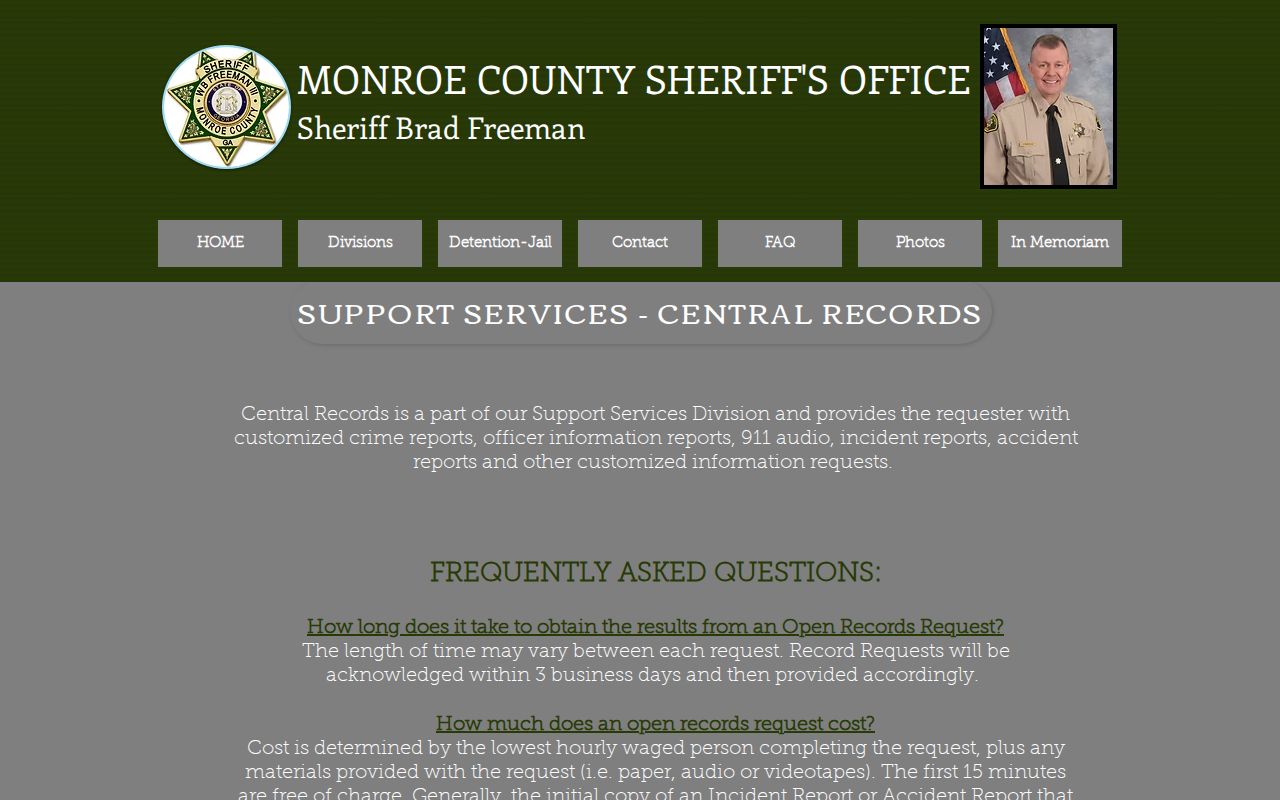
The records-policy reference is just that, a reference. It shows no booking photo and offers no shortcut around the sheriff's statutory review.
- Describe the person, approximate date, arresting agency, and exact record sought.
- Submit through the MCSO Records channels: online form, mail, records@monroecosheriffga.us, or fax (478) 992-5075.
- Wait for the three-business-day acknowledgment and written estimate if production takes longer.
- Review any withholding citation and ask for segregable nonexempt material rather than an answer to a general question.
- Pay the invoice before release if the office requires payment for the responsive records.
For a Monroe request, the online open-records request form is the direct electronic starting point.
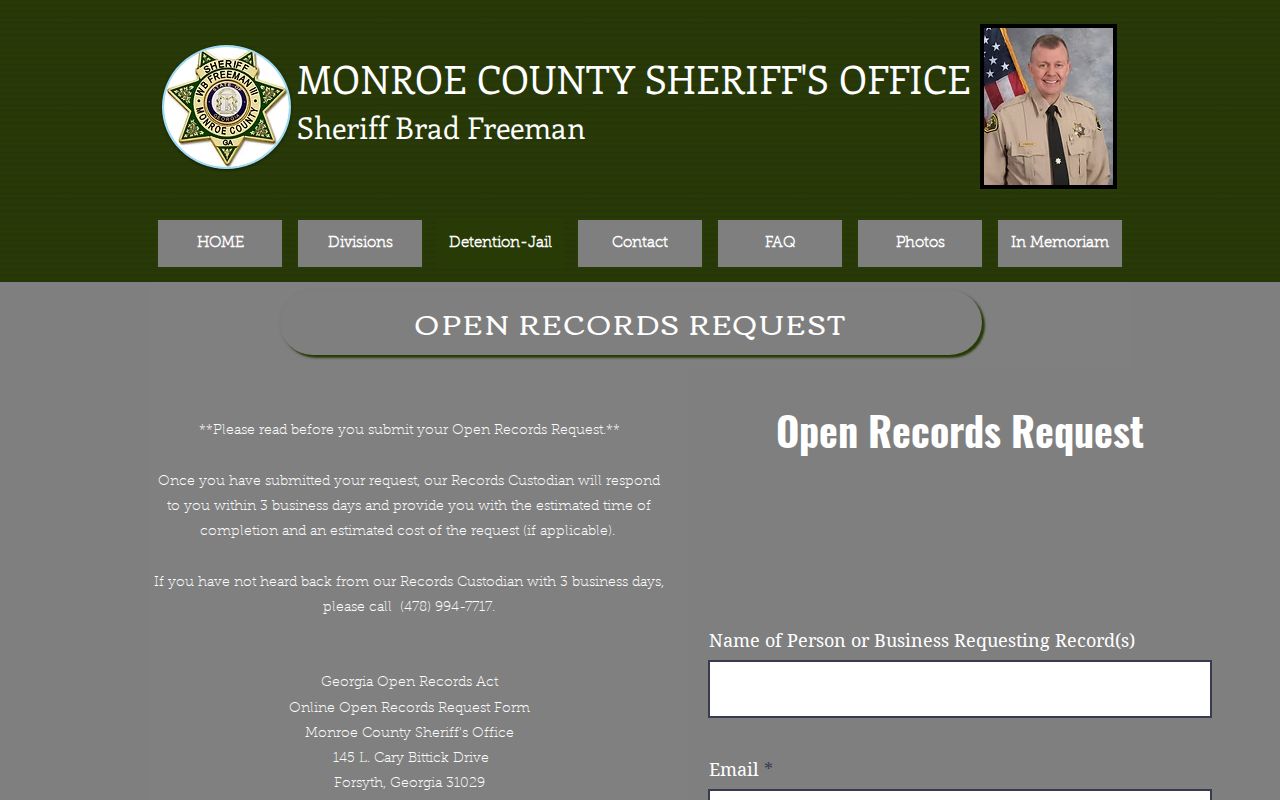
Use a focused description and keep the acknowledgment or invoice with the request record.
Monroe County Records
Monroe County Sheriff's Office / Records
145 L. Cary Bittick Drive
Forsyth, GA 31029
(478) 994-7717
records@monroecosheriffga.us
Fax: (478) 992-5075
A photo request carries an extra legal wrinkle. Under O.C.G.A. § 35-1-19(d), the requester must make a required truthful compliance statement, and MCSO's published policy says to call Records before promising that an image exists or will be supplied. Even a lawful request does not guarantee release.
Monroe's No-Photo Booking Policy
MCSO states it plainly. Booking photographs are not posted on its website pursuant to O.C.G.A. § 35-1-19(c). The public roster may still load a generic image element or blank placeholder. That is not a face photograph. Never copy it, label it as a mugshot, or read it as proof that the sheriff has a photo to hand over.
Georgia's rule is narrower than a blanket claim that every booking fact is private. Section 35-1-19 governs agency requests and publication pathways, including cases where a site demands payment or other consideration to delete an arrest image. For a searcher, the local practice is what matters. Text cards are public in the roster tools, while the ordinary Central Records workflow excludes mug shots.
Georgia Mugshot Law and Removal
Georgia's Open Records Act sits at O.C.G.A. §§ 50-18-70 through 50-18-76. The Georgia open-government resources walk through what agencies must release, what they can withhold, how fast they must respond, and what they may charge. MCSO follows the rule of acknowledging a request within three business days. Acknowledgment is not the same as delivery, though. When a response runs long, the office should explain the estimated timeline, the cost, and the legal basis for any withheld material.
Booking photos have their own statute, O.C.G.A. § 35-1-19. It restricts how an arresting agency hands over an image when the requester might place it on a site that charges for removal. Subsection (d) requires a signed affirmation about the intended use. Lying on that form creates its own legal exposure. Read the form closely, and never sign one that misstates what you actually plan to do. For the current wording, the official legislative source for § 35-1-19 is the place to look.
A link to the statute is a reference, not permission. Citing the law does not authorize republication of a booking image. Treat the text as guidance rather than a green light.
Georgia record restriction will not wipe out every copy of an old arrest on its own. Start with the GBI record-restriction guidance. Then check with the court or clerk that handled the case. Eligibility turns on how the case ended and which statutory category it falls under. The 2026 First Offender changes in HB 162 / Act 403 add another wrinkle, since older summaries may lag the new rules. Rely on current forms and the court's own instructions, not secondhand advice.
Was the case restricted, not prosecuted, dismissed, or acquitted? Georgia's commercial image-removal statute can compel a covered publisher to take a photo down at no charge. All it takes is a written request with proof. That route costs nothing. A deletion broker charges for something the law may already provide, so skip the middleman. Once the publisher confirms removal, ask for a stale-result refresh through Google's outdated-content tool or Bing's reporting process, and keep your confirmation records. Fix the source page first.
What if the record is juvenile or protected? Juvenile files carry statutory access limits with narrow exceptions, and MCSO also shields protected victim identity information. A missing name or charge can simply mean a lawful redaction.
Note: A source correction and a court restriction are separate steps, and neither promises that every independent archive will disappear.
Monroe Bond and Fast Release
The sheriff's bonding-process page covers four bond types: cash, property, professional, and transfer. A $20 sheriff's bonding fee also applies. Posting bond is a release condition, nothing more. Someone who bonds out leaves the current-custody roster quickly, but the booking itself still shows in the 24-hour or date-range view. For fees and release steps, the bonding process source is the county's own word.
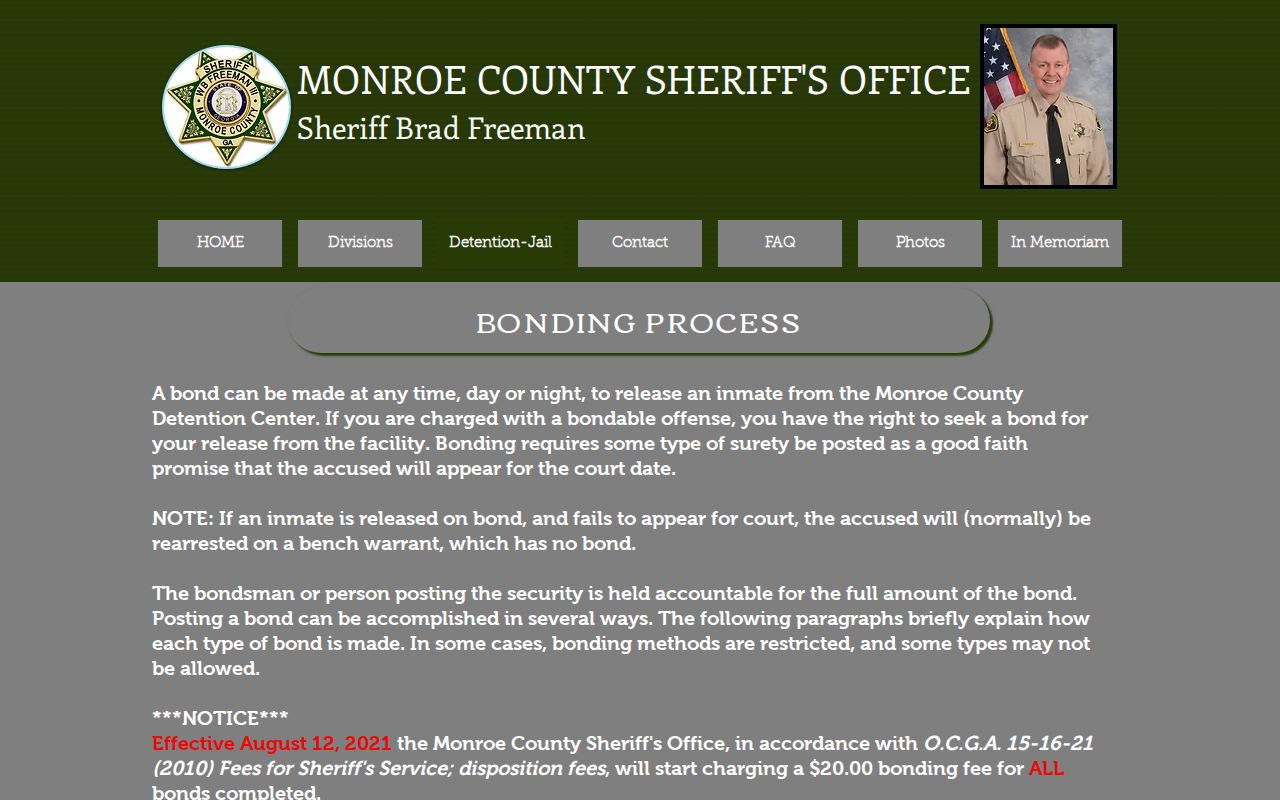
The capture explains the process, not the outcome of any individual case.
MCSO promises no fixed refresh schedule. So think "current when checked" rather than "real time." Booking dates and custody status are snapshots, and they shift whenever staff update the system.
Find Monroe County Busted Mugshots
Match the search tool to the custody stage. Don't chase a photo claim. A fresh booking tends to surface in the event feed. Someone still housed shows in Current Inmates. A released person may linger in a date-range result yet vanish from the current roster. State-sentenced people belong in the Georgia Department of Corrections search. Federal or immigration detainees sit in entirely different locators. The sheriff's portal is only one piece of the picture.
- Search Current Inmates by all or part of the name for custody now.
- Check Inmates Booked Last 24 Hours for the booking event, even if release may have happened.
- Use Inmates By Arrest Date for a wider date window and optional name filter.
- Compare the arresting agency, date, court, and charge text with the Monroe court index. Treat the booking card as a lead, not a disposition.
- If the record is not online, send a focused MCSO request and ask about the separate statutory photo process.
The official site offers no public Monroe booking-photo channel. A local newspaper or a secondary county page might run an image, but that is not an authoritative custody record. Confirm the name and date against MCSO first. Then read the court file for how the case actually ended.
Where Monroe County Mugshots Appear
A booking fact is born in one place; a picture can travel anywhere. Start with official text sources. Secondary sites drop releases, keep stale charges, and mix up duplicate names. Many leave pages up long after the court record moves on.
| Channel | Photo and authority | Access point |
|---|---|---|
| MCSO Current Inmates | Official text card, no public face photo. | Current roster |
| MCSO 24-hour and date range | Official booking event data, no public face photo. | 24 hours and date search |
| Courts and clerk | Official case filings and disposition, not a jail mugshot feed. | Georgia clerk search |
| GDC offender search | State correctional photo if available, not a county intake photo. | GDC query |
| Monroe County Reporter | Unofficial weekly coverage, sometimes small photos. | Reporter |
| Recently Booked and Busted Newspaper | Unofficial county pages with possible photos or placeholders; verify every item. | Recently Booked and Busted Newspaper |
The Georgia Gazette maintains a real Monroe County section and posts public-record material on a rolling basis. Helpful, but still unofficial. Mugshots.com keeps a Monroe archive, yet its history pages cannot stand in for the sheriff or the court. Arrests.org and Mugshots.zone have no verified Monroe-local landing pages. Treat a generic hit as generic, not county coverage.
Monroe Busted Roster Search
The official Current Inmates page opens directly on the current-custody roster, with a "Filter By Inmate Name" field if you have a specific person in mind. Skip the name box and the results simply paginate through everyone currently held. The same card layout carries over into both event views. One caution: the roster shows custody now, not every arrest the county has ever processed. The official current-inmate source also displays the blank search interface without hosting any face images itself.
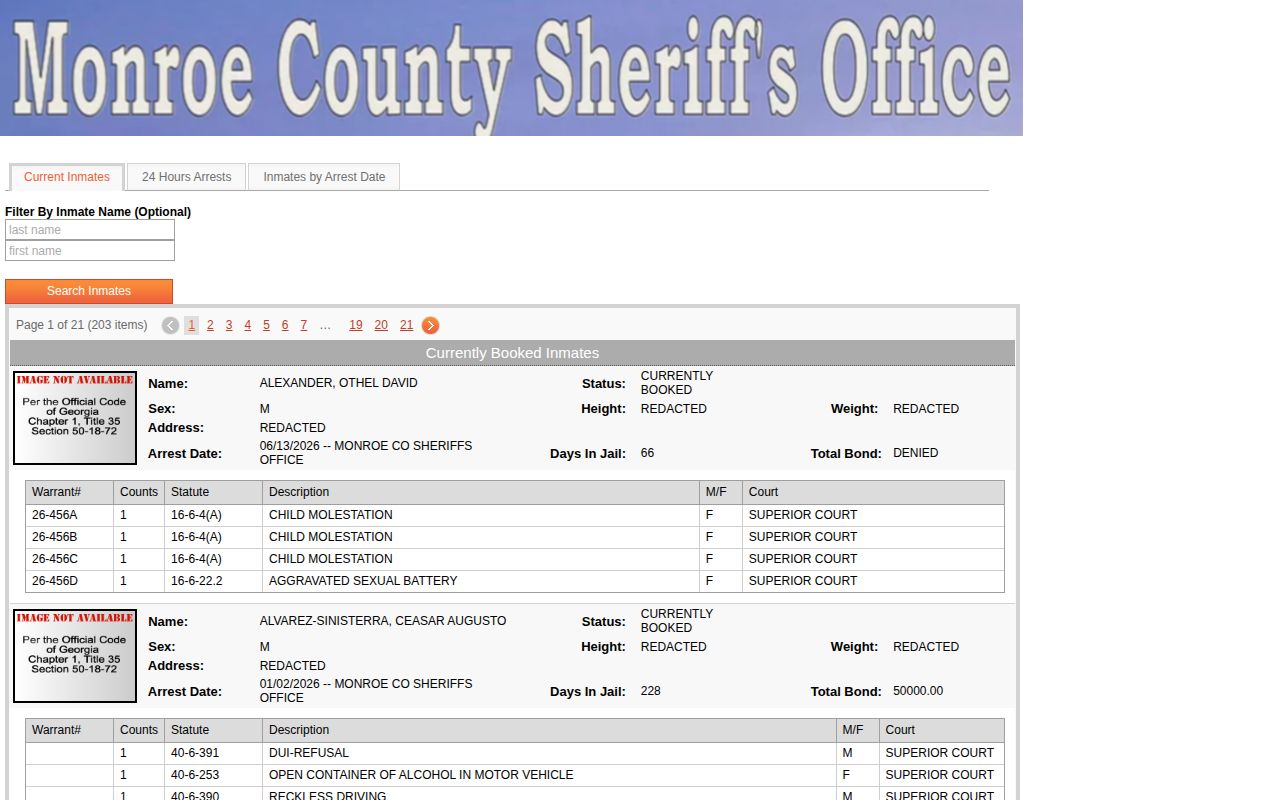
The card fields the public sees are plain text. Any generic image area in the portal is not a booking photograph.
Monroe's three-view design is its strongest local feature. Current Inmates answers who is housed right now. The 24-hour screen captures bookings in the exact last-day window. The date-range screen covers a week or any period you pick. A "released" status in an event view is not a glitch; it simply shows that being booked and being held are two different things.
- Open the view that matches the time question.
- Enter a partial or full name when the tool provides the filter.
- Read arrest date, agency, status, court, bond, and charge fields together.
- Switch to the date-range view if the person has left Current Inmates.
MCSO publishes apps for both platforms, the iOS app and the Android app, focused on public-safety news and anonymous tips. Nothing in their store descriptions promises an inmate roster or booking-photo feature. The InteropWeb portal therefore remains the one verified booking source.
Busted Last Night in Monroe
Need a look at last night's bookings? The sheriff's Inmates Booked Last 24 Hours feed shows booking events, not a headcount of who is still in custody. Each card carries a status. Some read "CURRENTLY BOOKED" and others read "RELEASED." That detail matters when someone bonded out fast, since a person can drop off the current roster yet still show up in this rolling window. The 24-hour booking source is the right tool when you want to know who got busted in the past day, not who is sitting in a cell right now.
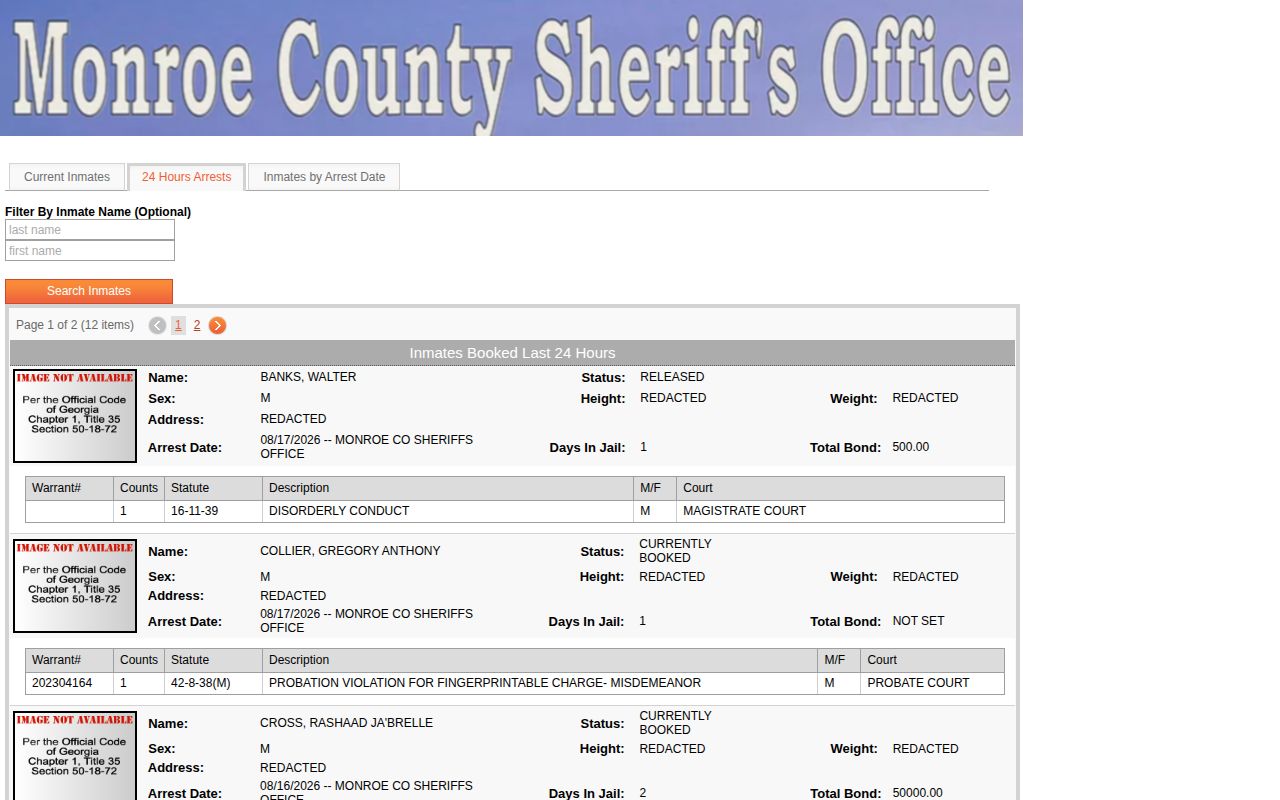
Timing is what that feed does best. Read each card's status field to see whether a person is current or already released.
For a longer look back, open Inmates By Arrest Date. It is a multi-day log. Set the From and To calendar controls to build your window, and add a name filter if you have one. Results include both current and released statuses for the dates you picked. Monroe publishes no separate 48-hour or 72-hour screen, so a three-day busted search simply means running the arrest-date source with a three-day range.
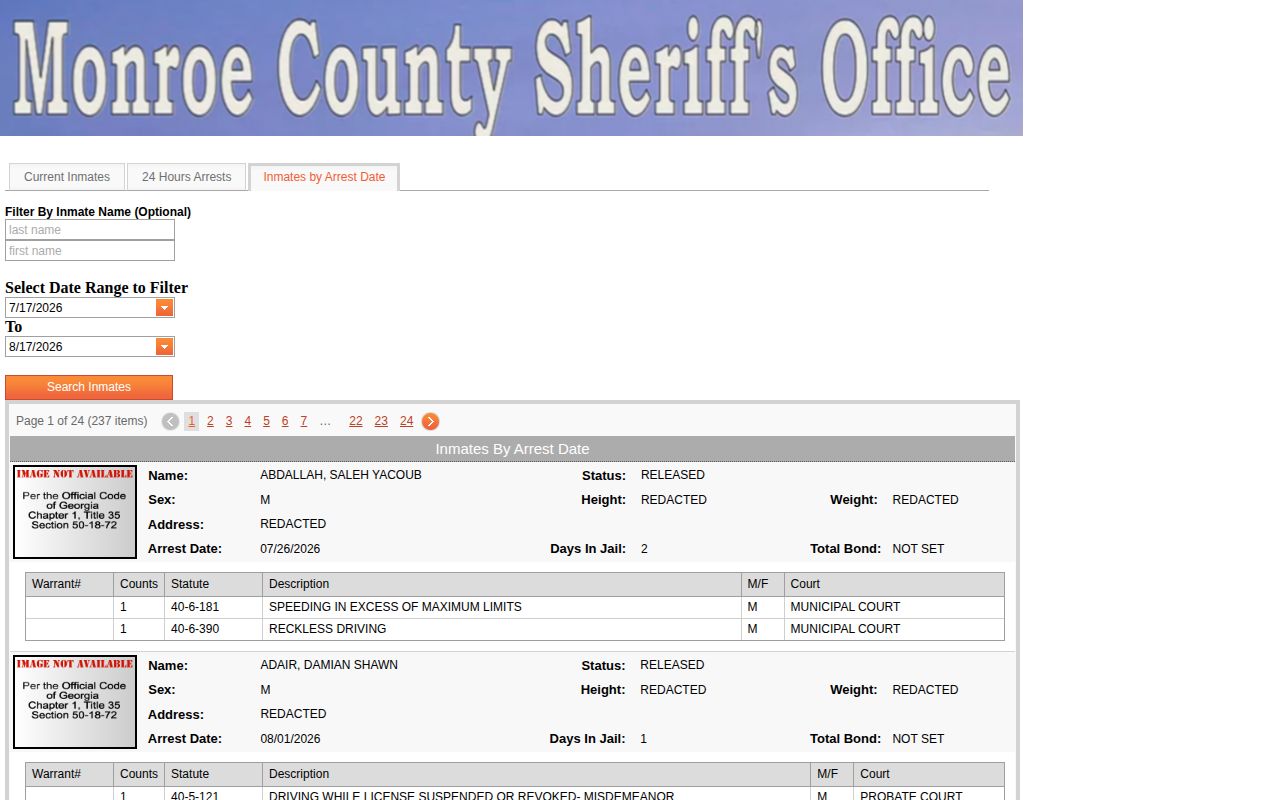
Treat any date range as a search boundary, nothing more. The vendor does not promise that older events survive forever in the feed. MCSO and InteropWeb publish no refresh interval and no guaranteed archive start date.
So check what the tool returns for the dates you care about. If an older booking is missing, ask for the retained record, or turn to the clerk of court and the local newspaper archive. The weekly paper sometimes keeps a story alive, but the date-range feed and the clerk remain the stronger first stops.
Note: A 24-hour result tracks booking time, while Current Inmates tracks custody, so the two lists answer different questions.
Monroe Busted Record Fees
Sometimes a fee question only gets answered by asking the office directly. MCSO gives requesters a cost estimate first and requires payment before releasing records. The first 15 minutes of staff research are free. After that, labor is billed at the rate of the lowest-paid qualified full-time employee. Copies, materials, and postage can add more. The MCSO page lists $3 for an incident report and $5 for an accident report, but those figures apply to those report types, not to any published booking-photo price.
One habit saves money. Ask for the estimate up front, especially when a request could span many dates or agencies. If the office withholds material, request the specific legal authority cited and any separable portions it can release in part.
GDC Photos after County Booking
State custody is a different animal from county custody. The Georgia Department of Corrections offender query covers people who have entered the GDC population, not the Monroe jail's just-booked feed. Plenty of people never show up there. Someone who bonds out, gets a dismissal, serves only local time, or has not been sentenced may have no GDC record at all. When a state offender profile does exist, the official GDC search form is the place to find it.
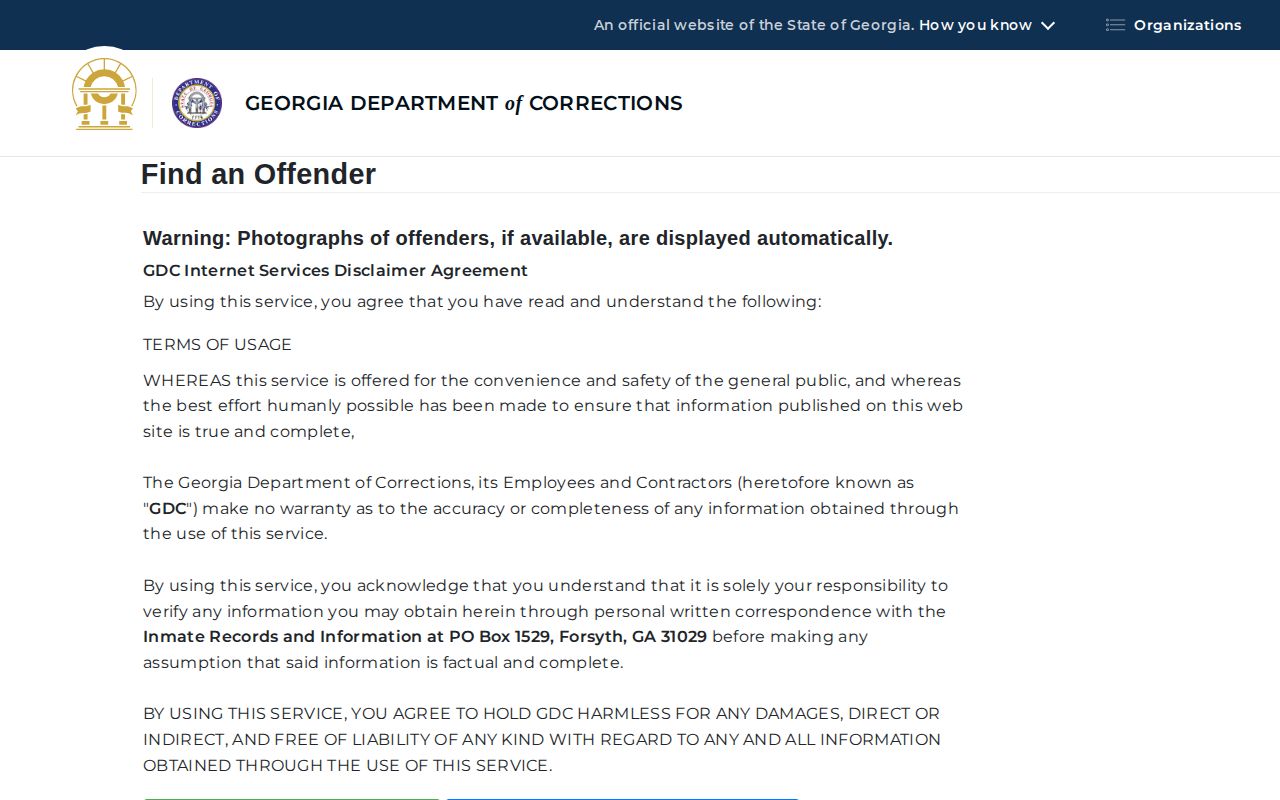
Keep the distinction straight. The GDC tool is a state-custody lookup, not a Monroe County jail roster.
Search fields include a GDC ID, case number, first and last name, gender, race, age, and other filters. A GDC ID is the strongest key. If a full surname returns nothing, GDC's own instructions permit a first-four-letter search with a broader results list, then confirm the match against age, gender, offense, and location. A photo appears only if GDC has uploaded one. It is a correctional profile photo, not a county intake image.
Records missing from the query can be requested through the department's open-records request path. Give a name and GDC ID when you have them. One trap worth knowing: GDC operates out of Forsyth, which is also Monroe's county seat, so a Forsyth address on a state record does not mean the person is housed in Monroe County.
Booked, Released, or in State Custody
Custody status decides where the record lives. One arrest can pass through several systems without becoming a new event. A person out on bond still has an open case. Once sentenced to GDC, that person leaves the current Monroe jail roster. Federal custody and ICE custody run on their own rules and their own locators. Match the custodian to the question you are asking.
| Stage | Where to look | What it proves |
|---|---|---|
| Just booked | MCSO 24-hour feed. | A booking event was returned in that window. |
| Currently held | MCSO Current Inmates. | The person is listed in current local custody when checked. |
| Released | Date-range feed, MCSO records, and court docket. | The event may remain while current custody no longer does. |
| State custody | GDC offender query. | A GDC profile may exist, with a photo if available. |
| Federal or ICE custody | BOP or ICE ODLS. | A separate federal or immigration custody result, not a Monroe booking. |
A few practical limits apply here. BOP results do not publish inmate photographs. ICE detention is civil custody, so it answers a different question than a criminal case does. The right move is always to query the system that actually holds the person.
Note: A state correctional photo belongs to a later custody record and should never be relabeled as a Monroe intake photo.
Monroe Busted Court Dispositions
Booking is the first record, not the last. First appearance addresses probable cause, counsel, and release terms. The court field on an InteropWeb card points toward the right docket. Magistrate Court handles warrants and preliminary matters. Forsyth Municipal Court or Probate Court may appear on local or traffic entries. State Court handles misdemeanors in its jurisdiction, while Superior Court handles felonies and broader matters.
Start with the Georgia Superior Court clerks search when Monroe records are available there, or use the Monroe County Clerk of Superior Court page. Search the full name, then compare the filing date with the arrest date and look for an accusation or indictment, amended counts, plea, dismissal, nolle prosequi, trial, sentence, or closure. If an index omits the document, ask the clerk for the official docket path.
The statewide clerk search interface is a starting point for court disposition research after the booking event.
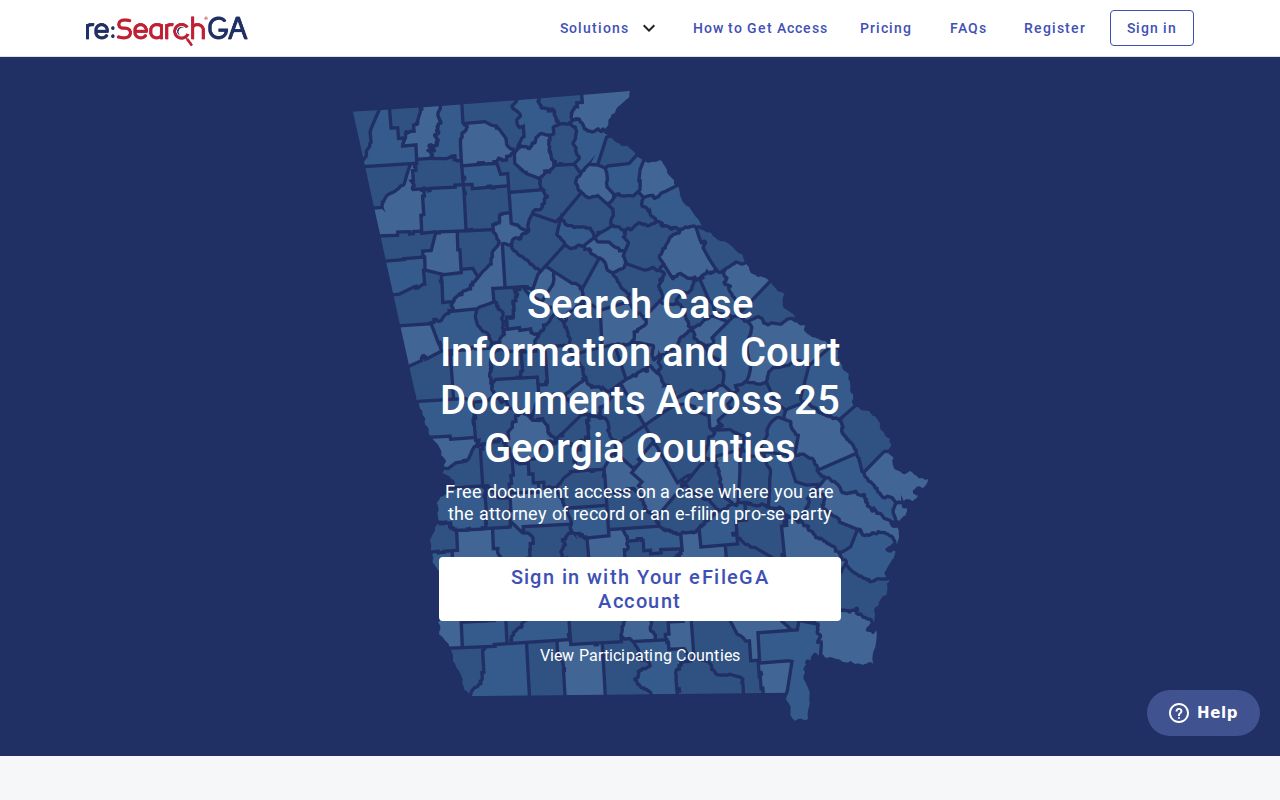
That court field on the booking card is the bridge. It hands you off from the jail record to the docket that carries the disposition.
- Booking
- Jail intake after an arrest, with identifying and charge fields.
- Arraignment or first appearance
- A court event where the person may hear charges and receive counsel or release conditions.
- Bond
- A release condition set by law or court process; it is not a verdict.
- Disposition
- The court's later outcome, such as dismissal, plea, acquittal, or sentence.
- Record restriction
- A legal limit on specified criminal-history access that does not automatically erase every independent archive.
Monroe Custody Alerts and VINE
Georgia VINE handles custody notifications for participating events across the state. Register for status alerts on a person in custody, though the service itself explains what its notifications cover and what they mean. For direct victim help, the sheriff's office lists Victim Services at (478) 994-7287.
The MCSO mobile app is a separate tool. It carries public-safety news, community updates, and a way to send anonymous tips. Booking photos are not part of what the store listings promise. In an emergency, call 911. A social post or app alert is never a stand-in for an official court notice.
Monroe County Busted Mugshots by City
Two incorporated municipalities make up the CITY MAP for Monroe County. Labels deserve care, though. Four facts often get confused: where someone lives, where the arrest happened, which agency made it, and which county did the booking. They are not the same thing. The county jail handles every booking anyway. So a city-level search still loops back to the same official roster and event feeds.
- Forsyth Busted Mugshots covers Forsyth Police Department arrests, the absence of a separate public blotter, the FORSYTH PD agency label in the county feed, and the city's police records form.
- Culloden Busted Mugshots covers the sheriff-policed city, the lack of a municipal booking feed, and the county date-range search as its most complete public event path.
Countywide media may name both cities, but neither one has its own dedicated mugshot stream. Check the agency and date on the official card before drawing conclusions.
Monroe's Old Booking Records
The public InteropWeb portal never states how far back its archive goes. For real answers, turn to the Georgia local-government retention schedule. It sets minimum retention for several jail series: booking records (LG-19-060) and inmate case files (LG-19-054) at 10 years after release, jail registers (LG-19-061) at 10 years after the last entry, daily incarceration lists (LG-19-050) at one year, and holding-area video (LG-19-047) at just 180 days. Those are custodian rules. They do not promise that the public portal shows every year or every field.
A booking photo may sit under an associated series, though MCSO should confirm that classification. Old records usually stay with the custodian that created them until lawful disposition or transfer. Ask MCSO Records first, then the county records officer or Georgia Archives, and be specific about the agency, record series, inclusive dates, and format.
The best local history lead is the digitized Monroe newspaper archive, which kept weekly arrest lists and incident coverage. An old clipping is a publication, not a jail file, so pair any story with the actual court record.
Note: The Georgia Archives retention schedule governs the local-government series and minimum periods described above.
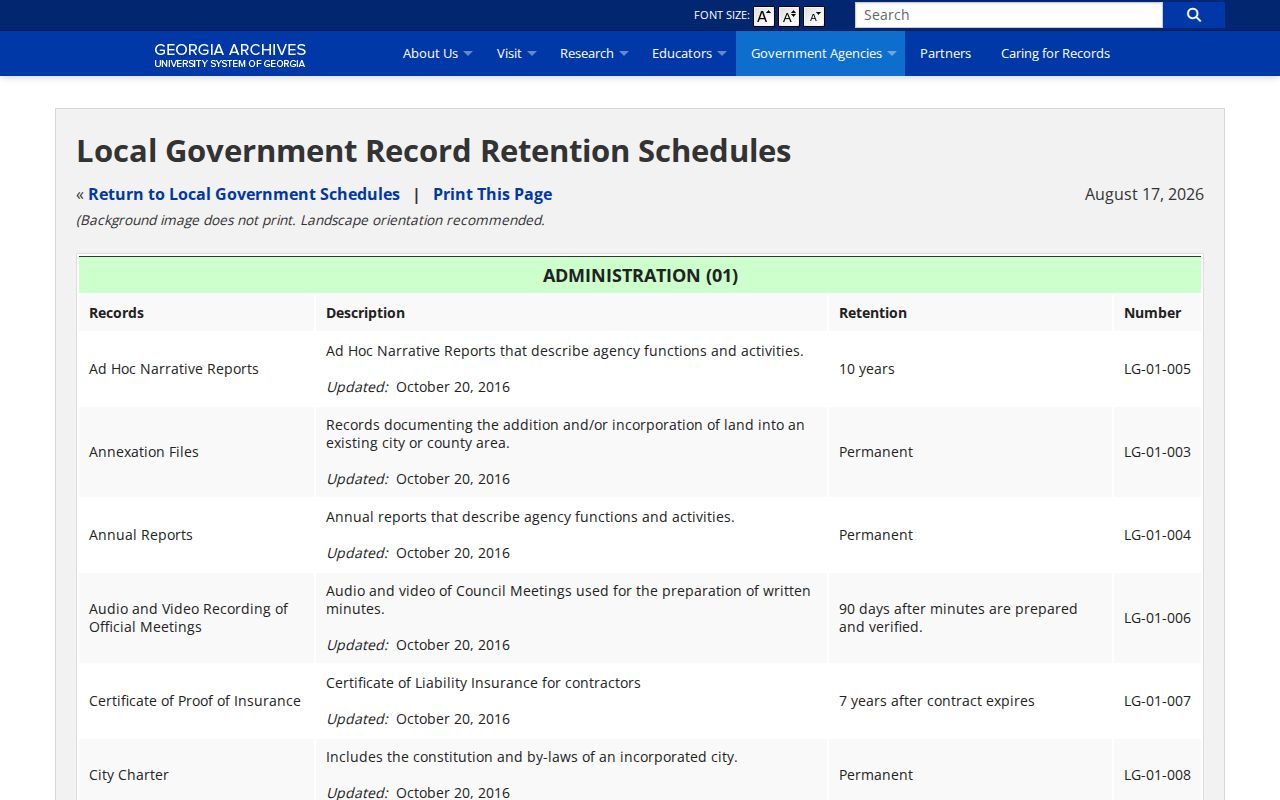
Retention tells a custodian how long to keep a file. It says nothing about whether each old booking field stays searchable online.
Search Monroe County Records
Match your question to the right channel. Custody, court, and records offices each hold one piece, and any detail worth relying on deserves a check with the office that created it.